Loading image...

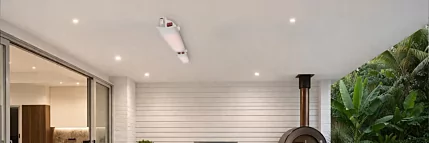
Radiant Heaters
Warmth, without compromise
Radiant heaters deliver targeted warmth with even heat distribution, with no drafts and no cold spots, creating a quiet, allergy‑friendly ambience indoors and out. Engineered with infrared technology, HEATSCOPE® radiant heaters pair energy‑efficient performance with refined design, offering fast, comfortable heat and lower running costs for contemporary spaces.
Models
Showing 3 items of 3
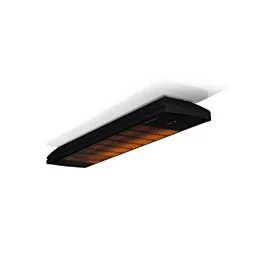
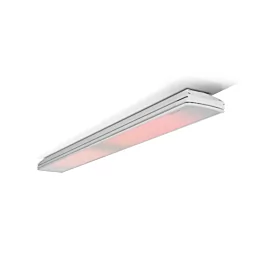
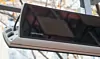
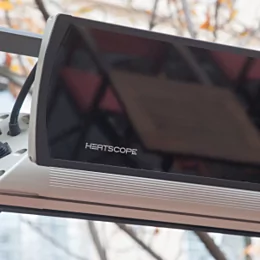
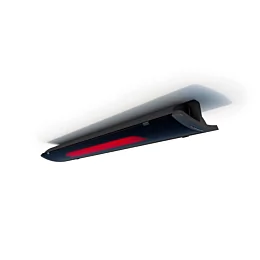
Spot 2800W Electric Radiant Heater · HEATSCOPE® Heaters
Vision 3200W Electric Radiant Heater · HEATSCOPE® Heaters
Pure+ 3000W Electric Radiant Heater · HEATSCOPE® Heaters

Loading image...

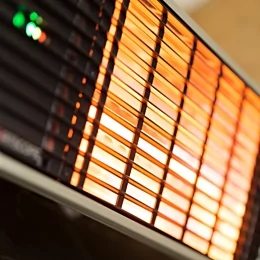
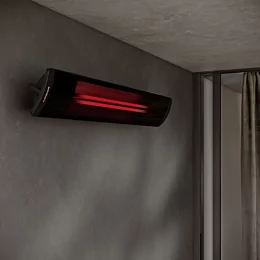
Carbon spiral heating technology
Dual carbon heating spirals power our radiant heaters with reduced visible light and a naturally cosy feel.
Loading image...


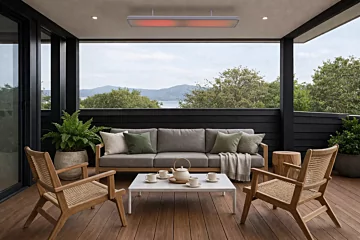
Energy‑efficient radiant heaters
HEATSCOPE radiant heaters convert 90–94% of energy into ambient warmth for low running costs and high comfort.
Loading image...


Rapid heat‑up times
Spot radiant heaters reach full output in about 15 seconds; Pure and Vision models ramp quickly owing to the glass‑ceramic front.
Two‑stage output control
Radiant heaters with 50% and 100% output modes via remote or hardwire for precise zone heating and energy optimisation.
Loading image...

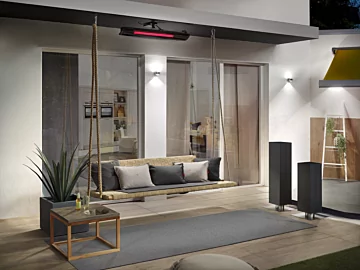
Outdoor‑ready IP protection
Pure radiant heaters are IP65 rated for exposed installs; Spot and Vision are IP24 for well‑covered areas.
Learn More
Radiant Heaters
Outdoor Radiant Heaters
FAQ's
What does the IP rating on a radiant heater mean, and why does it matter for outdoor use?
An IP rating certifies how effectively a radiant heater sustains direct heat transfer over its service life by specifying the sealed housing's resistance to solid intrusion and water. Defined by international standard IEC 60529, the code uses two digits: the first (0-6) grades protection against solids, from stray objects through to fine dust; the second (0-9) grades protection against water, from vertical drips through to pressurised jets. For outdoor use, both digits carry real weight.
The water digit gets most of the attention, but the solid digit is what determines how the heater copes with airborne dust, pollen, salt spray and fine grit, precisely the particles that settle on electrical components in coastal, windy or bushfire-prone sites. A higher first digit protects the heating element and internal wiring from the kind of gradual ingress that shortens service life long before water does.
HEATSCOPE ranges span IP24 to IP65, so the relevant question is not whether a heater is 'outdoor rated' but which pairing of digits suits the specific exposure. Matching the rating to the site protects performance, warranty validity, and the consistent direct heat transfer the infrared element is engineered to deliver.
Are HEATSCOPE® outdoor heaters suitable for commercial hospitality use?
Yes, HEATSCOPE® weather-resistant infrared heaters are engineered for both residential and commercial applications, and are installed in restaurants, cafes, bars, and hospitality venues.
Commercial durability is built into the core components. Carbon fibre heating elements are rated for at least 10,000 hours of operation, and the aluminium chassis resists discolouration and tarnishing over years of continuous service. There are no ignition components, gas connections, valves, or hoses to maintain, reducing downtime and servicing complexity in high-use environments.
For multi-zone installations, a single remote pairs with multiple heaters, and ZigBee motion sensors automate zones to activate only when areas are occupied, helping manage energy use across large terrace or dining areas. All models accept wall and ceiling mounting, with extension rods in 100, 300, and 500 mm increments providing height flexibility across varying ceiling configurations such as marquees, pergolas, and outdoor dining pavilions.
For venue specification, HEATSCOPE®’s technical team provides schematic diagrams and tailored positioning guidance based on your space’s dimensions, wind exposure, and installation height. The general principle: more wind exposure and greater installation height call for higher-output models with stronger beam reach.
What types of outdoor radiant heaters are available?
Heatscope offers four ranges of weather-resistant electric infrared heaters, each engineered for different settings and design preferences. All use double carbon heating elements with two-stage output control and come in black or white with optional extension rods.
The Spot is the most compact, available in 1,600W or 2,800W, ideal for smaller spaces and directional warmth. Its ceramic glass front delivers radiant efficiency above 94%, with an IP24 rating suitable for covered outdoor areas.
The Pure Plus is the most weather-resistant in the range, rated IP65 for fully exposed outdoor installation. This 3,000W heater features a convex glass-ceramic front and won a Red Dot Design Award in 2018.
The Vision produces the highest output at 3,200W and runs the longest at 1,661 mm, creating ambient atmosphere alongside substantial warmth. Its minimal visible light (300 lm) suits settings where you want heat without visual prominence. It’s rated IP44.
The Next suits transitional spaces, including semi-enclosed terraces or indoor/outdoor transitions. Its 3,000W output and swivel-joint mount offer directional flexibility; its slim aluminium body fits tighter design schemes. It’s rated IP25.
All ranges include a 2-year warranty and optional ZigBee smart control.
Is radiant heating suitable for all room types?
Radiant heating is suitable for most room types, with a few environment-specific exceptions to guide installation decisions.
Heatscope radiant heaters work well in living areas, dining rooms, bedrooms, kitchens, bathrooms, hallways, and open-plan spaces. The infrared heat carries through air without relying on ventilation or air circulation, making it particularly effective in enclosed, draught-prone, or high-ceiling rooms where forced-air systems underperform. Heat reaches occupants directly rather than dissipating overhead.
Environments where standard installation is not appropriate:
German-engineered and Red Dot Design Award winning, Heatscope heaters are tested rigorously across climates. The technology's independence from ducting and gas lines lets it adapt to any room geometry without constraining architecture.
What is infrared radiant heating technology?
Infrared radiant heating technology uses direct heat transfer: electromagnetic waves deliver warmth from the heater to people and surfaces, bypassing the surrounding air entirely. HEATSCOPE radiant heaters emit mid-wave infrared radiation that is absorbed by solid objects (people, floors, surfaces) on contact. Because air is largely transparent to these wavelengths, warmth is not lost to wind, draughts, or dispersal in open spaces.
Mid-wave infrared is quickly absorbed by solid surfaces and skin, replicating the natural sensation of direct sunlight without heating the air around you. HEATSCOPE's dual carbon spiral heating elements emit this radiation through ceramic glass fronts with minimal visible light, delivering quiet, directed warmth. Designed to German engineering standards, this technology performs consistently indoors and in exposed outdoor environments.
What are the main advantages of HEATSCOPE® radiant heaters compared to gas-powered heating appliances?
Direct heat transfer is the defining advantage of HEATSCOPE® radiant heaters. Unlike gas heating, which heats the air first and loses warmth to wind and surroundings, infrared heaters beam radiant heat directly to people and objects. You feel warmth in seconds rather than minutes, and wind does not steal the heat, a critical edge in outdoor settings.
Beyond heat delivery, electric infrared eliminates the infrastructure demands of gas. No gas lines, no flue or ventilation requirements, no specialist fitters. Wall or ceiling mounting takes two screws and a 220-240V circuit, freeing floor space and keeping heaters out of reach. Zero combustion byproducts mean the units are safe for enclosed outdoor spaces (patios under pergolas, covered dining areas, outdoor rooms) where ventilation limits would rule out gas.
The reliability advantage is significant. No valves, ignition components, or burners to service. No annual maintenance, seasonal prep, or gas-pressure issues. Silent operation with no fans stirring dust or allergens. One installation and the heater runs flawlessly year after year: the set-and-forget simplicity that appeals to hospitality operators and discerning homeowners alike.
When you compare the total ownership experience, including instant heat, no emissions, design freedom, and zero-service reliability, the case for radiant electric is compelling.
What is radiant heating and how does it work?
Radiant heating is the direct transfer of thermal energy from a heat source to solid objects and people using electromagnetic waves, without heating the surrounding air. Heatscope electric radiant heaters emit mid-wave infrared radiation from their carbon heating elements; this energy travels directly through space like sunlight, warming surfaces, bodies, and furniture beneath them rather than heating the air in between.
The mechanism is precise: electric current energises carbon spirals, which glow and emit infrared waves. These waves are absorbed directly by skin and surfaces, creating pleasant, enveloping warmth. Because the heat travels to objects rather than dispersing into air, 87–94% of input electricity converts into usable ambient heat, substantially more efficient than convection-based systems. The directional nature of radiant heat makes it effective even in windy or draughty outdoor conditions, where air-based heating fails. Full warmth output arrives in as little as 15 seconds.
How do HEATSCOPE® radiant heaters compare to other outdoor electric heaters?
HEATSCOPE® radiant heaters deliver direct heat transfer using mid-wave infrared technology that penetrates the first skin layers, creating genuine sun-like warmth rather than surface heating. Unlike many electric outdoor heaters that rely on short-wave infrared producing bright red glows and uncomfortable high-intensity heat, HEATSCOPE® heaters use colour-matched grill screens to reduce light output to just 30-40% of traditional radiant heaters. The Spot series produces approximately 600 lumens (per product specifications), whilst the Vision and Pure Plus ranges deliver less than 300 lumens, preserving outdoor ambience without harsh brightness.
The engineering differences extend to durability and materials. HEATSCOPE® heaters use carbon fibre heating elements and, in the Pure Plus range, SCHOTT NEXTREMA® premium convex glass, a material exclusivity among electric infrared heaters. The Pure model achieves IP65 weather resistance (dust and waterproof), exceeding the typical IPX5 rating of competitors, ensuring reliable outdoor performance across seasons.
For connected home environments, an optional ZigBee Bridge enables wireless control, motion sensors for automated triggering, and compatibility with Alexa and Google Assistant. An optional WiFi Smart Switch adds smartphone app control. Dual power levels at 50% and 100% output allow precise zone heating for energy efficiency without waste.
Does radiant heating affect air quality?
No, radiant heating does not degrade indoor air quality. Heatscope Heaters use mid-wave infrared radiation, which transfers heat directly to solid objects (people, furniture, and floors) without heating the air itself. This fundamental difference from forced-air heating systems creates distinct air-quality benefits.
Because radiant heaters have no fan or blower, there is no convection to disturb dust, pollen, or other particulates. The sealed construction (IP25–IP65, depending on model) prevents internal particulate accumulation. There are no combustion byproducts, ventilation requirements, or filters to maintain.
Radiant heating also does not alter humidity levels the way forced-air systems do. You get even thermal comfort without the dry-air side effects common to traditional heating. For users with allergies or asthma, the absence of air circulation and combustion makes radiant heaters a practical choice for creating a quieter, cleaner indoor environment.
What is carbon spiral heating technology and why does Heatscope use it?
Carbon spiral heating technology uses two coiled carbon filaments, energised by an electric current, to produce mid-wave infrared radiation that warms people and surfaces directly. Heatscope’s weather-resistant range encloses this technology in housings rated for outdoor exposure, maintaining full performance in open patios and exposed living areas.
Heatscope uses carbon spirals because they generate heat as the primary output, not light. Most outdoor radiant heaters rely on light tubes that produce brightness first, with heat arriving as a by-product and an aggressive red glow. Carbon spirals reverse that priority, operating at filament temperatures of 1,100–1,300°C [2,012–2,372°F] and a colour temperature of 1,550–1,650 K, producing only 30–40% of the visible light of traditional radiant heaters. The result is sun-like warmth absorbed just under the first layers of skin, with no harsh glare to flatten the colour of food, joinery or lighting design.