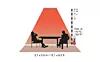
How each system spends energy: forced-air HVAC vs direct radiant heat
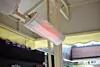
The two systems diverge at the most basic level: what they spend energy on after the heat is generated. A forced-air HVAC system generates heat at a central furnace or heat pump, then spends additional energy moving conditioned air through ductwork to every room it serves. Radiant heating in the infrared sense skips the air-moving step entirely. The element converts electricity into infrared radiation, and that radiation warms the people and surfaces it lands on directly, the same way the sun warms your face on a cold but clear day.
That difference, infrared heating vs forced-air, sounds academic until you follow the energy. Every handoff in the forced-air chain, furnace to air to duct to room to thermostat, is a chance to lose some of what you paid for.
Loading image...


Forced-air HVAC | Direct radiant heat | |
|---|---|---|
Energy path | Heat the air, then move it through ducts to each room | Convert electricity to infrared, warm bodies and surfaces directly |
Where losses occur | Duct distribution, leakage, stratification, blower energy | Minimal; conversion happens at the point of use |
Time to felt comfort | Minutes, while the air volume warms and circulates | Seconds, the moment the element reaches output |
Where forced-air loses energy
Forced-air systems lose energy in the gap between generating heat and delivering it. The U.S. Department of Energy, in its Energy Saver guidance, notes that radiant heating is usually more efficient than forced-air heating precisely because it eliminates duct losses. Heat leaks from ducts into unconditioned roof spaces and wall cavities. Warm air rises and pools at the ceiling, where nobody is sitting, while the floor stays cool, a stratification problem that pushes the thermostat to call for still more heat. And every time the air volume cools between cycles, the system has to re-warm it from scratch.
Where radiant heating avoids those losses
Radiant heating sidesteps that whole chain because there is no air to move, no duct to leak from, and very little to re-warm. Across the Heatscope range, the carbon elements turn between 90% and 94% of the energy they draw directly into ambient heat, with the conversion happening at the heater rather than at a furnace metres or floors away. For context, a gas furnace at 80% AFUE sends one dollar in five up the flue before heat reaches the room, while the radiant element converts at the point of delivery, with no distribution leg to lose anything in. The warmth you pay for is the warmth that reaches the zone, which is the core efficiency case for infrared radiant heaters in the spaces they suit.
Why "heating the air" vs "heating the people" changes the maths
Heating the air and heating the people are two different goals, and conflating them is what makes the single-number comparison so misleading. To feel comfortable, a person needs a combination of air temperature and radiant warmth, what building physicists call mean radiant temperature. The CIBSE guidance on radiant panels, summarised by Tim Dwyer, makes the point cleanly: because a radiant system warms surfaces and occupants directly, the air itself need not be heated to the same temperature to achieve the same felt comfort, which is reflected in reduced energy use. Forced-air has to lift the temperature of the entire air volume to make the room feel warm. Radiant heating lets you feel warm at a lower ambient air temperature, so the energy target is smaller from the start.