Loading image...
A litre of fireplace-grade bioethanol looks unremarkable on the shelf. Clear liquid, plain bottle, a small flame arrester at the spout. What it does in a burner, though, depends almost entirely on what happened to it months earlier, in fields and fermentation tanks the buyer will never see. That gap between agriculture and atmosphere is where the real story of the fuel sits, and it’s the part most homeowners and specifiers never get walked through. The bioethanol fuel production process is a long sequence of choices, each one quietly shaping the flame you eventually light in your living room.
Loading image...
Bioethanol fuel is a plant-derived alcohol made by fermenting and distilling sugars from renewable biomass, then refined and denatured for safe combustion in ventless appliances. It shares the same molecular structure as food-grade and laboratory ethanol; the difference is what happens next: a tighter purity specification, controlled denaturing, and testing engineered for a clean, ventless burn rather than an engine or a flask. The version sold for fireplaces sits in a narrower purity band than its automotive cousin, and that’s a deliberate engineering choice. That journey from field to flame is a longer story than the bottle suggests, and the steps in it are exactly what determine whether the fuel of renewable bioethanol fuel delivers once it’s lit.
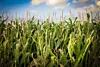
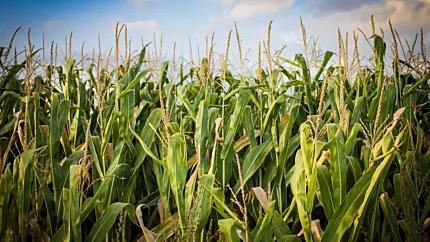
Every litre of bioethanol begins as a plant. The choice of plant, called the feedstock, is the first variable in the chain and the one that quietly sets the ceiling for everything downstream. Some feedstocks ferment cleanly and yield a fuel that refines easily; others carry heavier residues that demand more work in distillation. According to the International Energy Agency, bioethanol is classified as a low-carbon renewable biofuel produced from sugar cane, corn, and cellulosic waste, and demand for biofuels has been growing at close to 6% per year.
For the reader trying to understand what is in their bottle, three feedstock families matter.
Sugar crops are the most direct route from plant to alcohol. Sugarcane and sugar beet store fermentable sugars in their tissues, which means yeast can act on them with minimal preparation. The process is short, the by-products are well understood, and the resulting ethanol carries fewer trace impurities into distillation. For a fireplace fuel, that head start translates into a cleaner profile at the burner.
Starch crops require one extra move. Their carbohydrates are locked into starch chains, so enzymes have to break them down into simpler sugars before fermentation can begin. That added step adds complexity but doesn’t compromise the end fuel; it simply means more of the process happens inside the tank rather than in the field.
The newest route uses cellulosic biomass, the woody, fibrous part of plants that traditional fermentation can’t touch. Enzymatic hydrolysis breaks the cellulose into fermentable sugars, opening up agricultural residues and dedicated energy crops as inputs. Second-generation bioethanol is still scaling up commercially, but its long-term appeal is that it avoids competing with food crops.
Two bottles labelled bioethanol can begin life very differently. Feedstock provenance influences the alcohol concentration achievable in distillation, the residual compounds carried into the final product, and the lifecycle carbon footprint of the fuel. A meta-analysis of 585 lifecycle studies by Boutera and colleagues put the median bioethanol footprint at around 40 g CO₂ eq. per megajoule across pathways, and confirmed feedstock type as the primary determinant of how well the fuel performs against fossil alternatives.
Loading image...

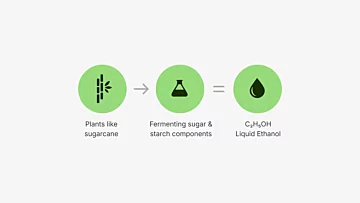
The canonical production sequence has seven stages. Each one shifts the material a little closer to a clear, fuel-grade alcohol the burner can accept without complaint.
Stage | What happens | What it does for the finished fuel |
|---|---|---|
Preparation | Feedstock is cleaned, milled, or pressed | Exposes sugars or starches for the next step |
Conversion | Enzymes break starches and cellulose into sugars | Makes the carbohydrates available to yeast |
Fermentation | Yeast metabolises sugar into ethanol and CO₂ | Produces the base alcohol at low concentration |
Distillation | Ethanol is separated from water by boiling point | Lifts purity from roughly 10% to around 95% |
Dehydration | Residual water is removed using molecular sieves | Pushes the alcohol into the fuel-grade band |
Denaturing | Approved additives make the alcohol unfit to drink | Meets regulatory and excise requirements |
Quality control | Batches are tested against purity specifications | Ensures the fuel performs predictably at the burner |
Preparation is unglamorous but consequential. Sugarcane is crushed to extract juice; grain is milled into a fine flour; cellulosic feedstocks are mechanically and thermally pre-treated to expose their fibres. Anything left intact at this stage either fails to ferment or fouls the equipment downstream. For starch and cellulosic feedstocks, an additional conversion step is where chemistry meets biology: amylase enzymes break starch chains into glucose, while cellulases and hemicellulases unlock the sugars trapped inside plant cell walls. The aim is a clean sugar solution that yeast can ferment without resistance.
Fermentation is the heart of the process. Yeast, most commonly Saccharomyces cerevisiae, consumes sugar and produces ethanol and carbon dioxide. Research by Mohd Azhar and colleagues at the journal Biochemistry and Biophysics Reports notes that S. cerevisiae dominates industrial fermentation because of its high ethanol productivity, high ethanol tolerance, and ability to ferment a wide range of sugars. The result is a low-strength alcohol solution, often only 8–12% ethanol, called the beer or wash. Everything that follows is a process of refinement: extracting that 8–12% and lifting it into the fuel-grade band.
Distillation lifts that weak alcohol into something useful. Ethanol boils at a lower temperature than water, so heating the wash in a column separates the two: ethanol vapour rises, water stays behind, and successive distillation stages push the concentration up. By the end of conventional distillation, the alcohol is around 95% pure. That ceiling, called the azeotrope, is a physical limit; ordinary distillation can’t go past it.
Fuel-grade ethanol needs to be drier than the azeotrope allows. Modern facilities use molecular sieves, beds of microporous material that adsorb water molecules while letting ethanol pass through. The result is anhydrous, or near-anhydrous, alcohol that meets the purity specifications written into international fuel standards such as ASTM D4806 in the United States and EN 15376 in Europe. e-NRG is formulated to meet these specifications, not the looser requirements that apply to household or automotive grades.
Denaturing is a regulatory and safety requirement. Fuel ethanol is rendered unfit for human consumption by adding small quantities of approved denaturants, which lets it cross borders and tax brackets without being treated as a beverage. ASTM D4806 sets out the permitted denaturants for fuel ethanol and explicitly prohibits substances such as methanol, pyrroles, turpentine, ketones, and tars. The intent is unambiguous: denature the alcohol, but don’t compromise the clean burn.
The last stage is the one most production facilities are proudest of. Batches are tested for ethanol content, water, methanol, chlorides, copper, acidity, and sulfur. A fuel that passes is consistent from bottle to bottle, which is exactly what an unvented appliance needs. A fuel that doesn’t gets rejected or reblended. Each of those seven steps answers a question the burner will eventually ask of the fuel.
Loading image...
Production quality is invisible until you light the fuel. Then it becomes the whole story.
A bright, steady, vibrant flame is the visual evidence of a clean fuel. Lower-purity bioethanols, or fuels carrying residues from inconsistent distillation, produce dimmer flames, irregular flame height, and uneven colour. e-NRG is formulated to a tighter purity specification than household, cleaning, or automotive ethanol grades, which is what gives the flame its consistency across the EcoSmart Fire burner range. That consistency traces directly to the production discipline upstream.
High-purity fuel is what makes ventless operation practical indoors. Research by Vicente and colleagues published in the Journal of Hazardous Materials confirms that ventilation and burner design are the primary determinants of indoor air outcomes during ventless bioethanol operation, which is precisely why EcoSmart Fire burners are certified to EN 16647 and why e-NRG is formulated to a tight purity specification. Clean combustion at the source reduces the burden on the room’s air exchange from the moment of ignition, and the room-size guidance published with every burner is built around that combination of fuel and appliance.
Burn time is a property of the burner, but it depends on the fuel feeding it. Inconsistent purity changes how much usable alcohol is in each fill, which makes burn-time figures unreliable across batches. Burners across our ethanol range run between five and fourteen hours per fill depending on size and flame setting, and that range is only meaningful when the fuel meets a consistent specification.
Well-produced fuel leaves the burner clean. Switching to a higher-purity fuel like e-NRG improves flame quality progressively, because earlier residue clears over the first few fills as the burner normalises to a consistent specification. That reset is worth knowing about, because it means the first fill won’t always reflect what the burner is capable of. Once the burner has settled into a clean fuel, residue, soot, and ash stay where they belong: out of the appliance, off the surrounds, and out of the room.
Denaturing sometimes gets read as adulteration. It isn’t. Denaturing is a controlled, regulated step that adds approved compounds in small quantities so the alcohol can’t be consumed as a beverage, while leaving its combustion behaviour intact for fireplace use.
A denaturant is a substance added to ethanol to make it unfit to drink. The categories are tightly specified by standards bodies, and fuel ethanol in particular has a narrow approved list. The denaturant doesn’t change the alcohol’s molecular structure; it changes what it can legally and safely be used for.
Fireplace-grade fuel is a formulation, not a single ingredient. It’s high-purity ethanol plus a small, deliberate set of additives that meet regulatory requirements without compromising the burn. That’s why high-quality producers describe their fuel as formulated and tested rather than simply distilled.
Not all ethanol is the same product.
Grade | Typical use | Production priorities |
|---|---|---|
Fireplace bioethanol | Decorative indoor and outdoor fires | High purity, low odour, low residue, controlled denaturing |
Household alcohol | Cleaning and surface use | Lower purity, harsher denaturants, not for combustion |
Laboratory ethanol | Analytical and scientific use | Very high purity, specific denaturants for lab work |
Transport ethanol (E10, E85) | Blended motor fuel | Purity to ASTM D4806, blended with gasoline as denaturant |
The categories overlap on chemistry and diverge on intent. A fuel made for an engine isn’t optimised for a living room, and a household cleaner isn’t optimised for either.
The production story doesn’t end at the still. Once the fuel passes quality control, it has to be filled, sealed, labelled, and shipped without losing the properties it was made for. Packaging is part of the fuel, not an afterthought to it.
Containers without flame arresters have specific requirements around handling, which is why every e-NRG bottle is fitted with one. Decanting is performed in well-ventilated spaces away from ignition sources, and appliances are never filled directly from the bottle. A handful of label details tell the buyer whether a bioethanol fuel is genuinely fireplace-grade:
A clearly stated alcohol content or compliance with a recognised fuel-grade standard
A flame arrester fitted to the bottle
A safety data sheet available on request or as a download
Storage and handling guidance printed on the pack
A traceable manufacturer or distributor
The EcoSmart Fire burner range that e-NRG is designed for carries UL 1370-16 certification in the United States and EN 16647 certification in Europe, which means the fuel specification and the appliance safety standard were developed in tandem. These aren’t marketing details. They’re the production process making itself visible to the reader holding the bottle.
Loading image...

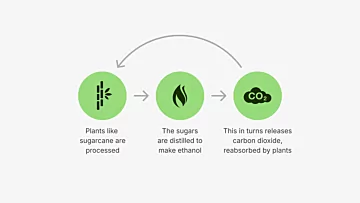
The sustainability case for bioethanol rests on the production process being as efficient as the combustion is clean. Renewable feedstocks regrow within a single agricultural cycle, fermentation by-products feed into adjacent industries from animal nutrition to chemicals, and modern distillation has steadily reduced energy intensity per litre. Munoz and colleagues, writing in the International Journal of Life Cycle Assessment, place bio-based ethanol at 0.7–1.5 kg CO₂ eq. per kg on a cradle-to-gate basis, compared with 1.3 kg CO₂ eq. per kg for fossil-based ethanol. The numbers vary by feedstock and process, but the direction is consistent. e-NRG’s plant-based sourcing sits inside that same cradle-to-gate logic: a renewable feedstock, refined to a fireplace-grade specification, packaged for safe handling and clean combustion.
The production detail doesn’t need to follow you home. What does is a short checklist: a producer that publishes its standards, a label that names the fuel grade, a flame arrester on the bottle, and a transparent trail from feedstock to finished product. A fuel that arrives with that paperwork behind it tends to behave the way the appliance was designed to behave. e-NRG publishes its safety data sheet, ships every bottle with a flame arrester, and is the only fuel EcoSmart Fire names as approved for the full burner range, which makes it the obvious starting point for the qualities this article describes.
The bioethanol fuel production process is easy to think of as industrial chemistry happening somewhere far from the room you actually heat. It isn’t. Every choice made in the field, the fermentation tank, the distillation column, and the denaturing step travels into the burner with the fuel and shows up at the flame.
That continuity is what makes bioethanol an unusual product. The same renewable raw material that makes it sustainable is what makes it clean, and the same production discipline that makes it clean is what lets it run inside a building without a flue. A fireplace fuel is rarely treated as a designed object, but a well-made one is exactly that, and the story of how it gets to the bottle is the story of why it works once it’s lit.